The Stelmužė Oak: A Living Elder at the Edge of Time
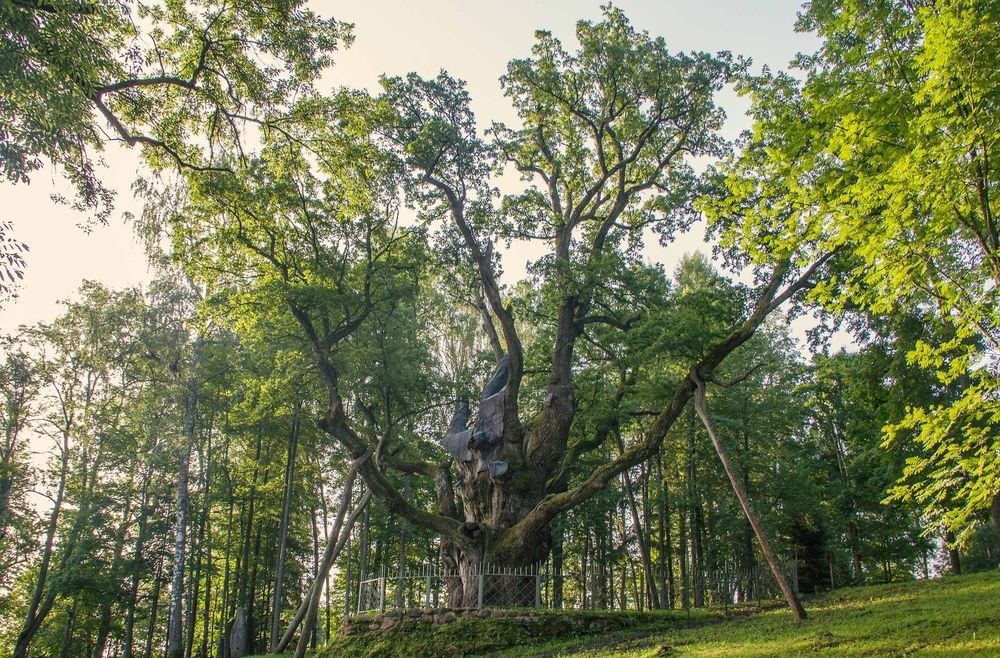
In north-eastern Lithuania, near the village of Stelmužė in the Zarasai district, stands a tree that feels less like a plant and more like a witness. The Stelmužė Oak (Quercus robur L.) is widely regarded as the oldest oak in Lithuania and one of the oldest in Europe. Its age is commonly estimated at 1,000–1,500 years, though some believe it may be even older. Considering the first mention of Lithuania in historical sources, the oak even predates the modern Lithuanian state making it a living presence far older than the country itself.
A Giant Shaped by Time and Decay
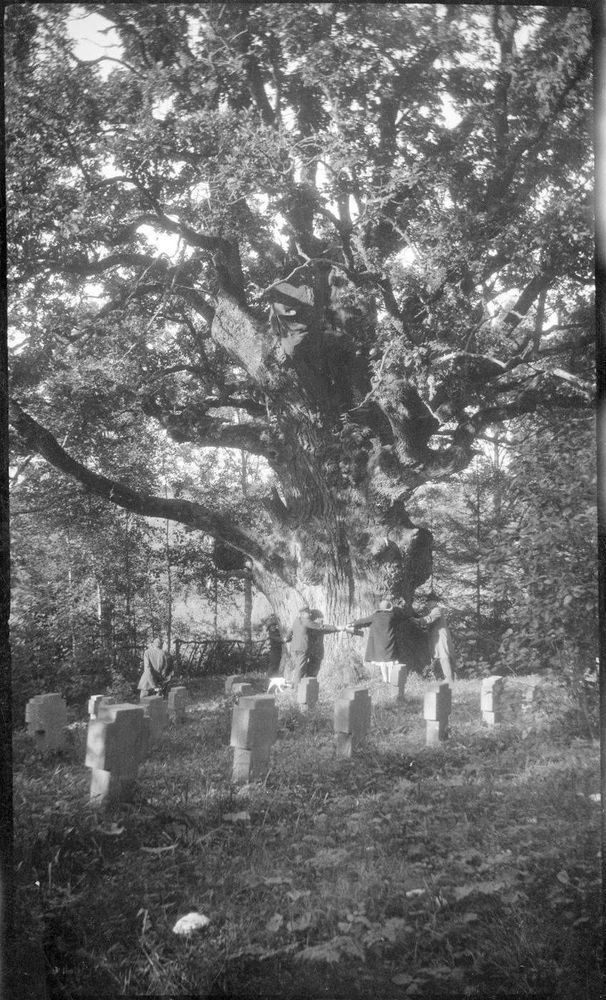
The oak’s extraordinary size hints at its great age. Its trunk measures around 13 metres in circumference, so wide that it takes about nine people holding hands to encircle it. The tree rises to approximately 23 metres, although today only parts of its crown remain fully alive.
Estimating its precise age is difficult. Over the centuries, the inner trunk gradually decayed and eventually disappeared, leaving the oak hollow. Parts of the rotted wood were later removed, making dendrochronological dating impossible. Like many ancient trees, the Stelmužė Oak carries time not in rings, but in form, scars, and memory.
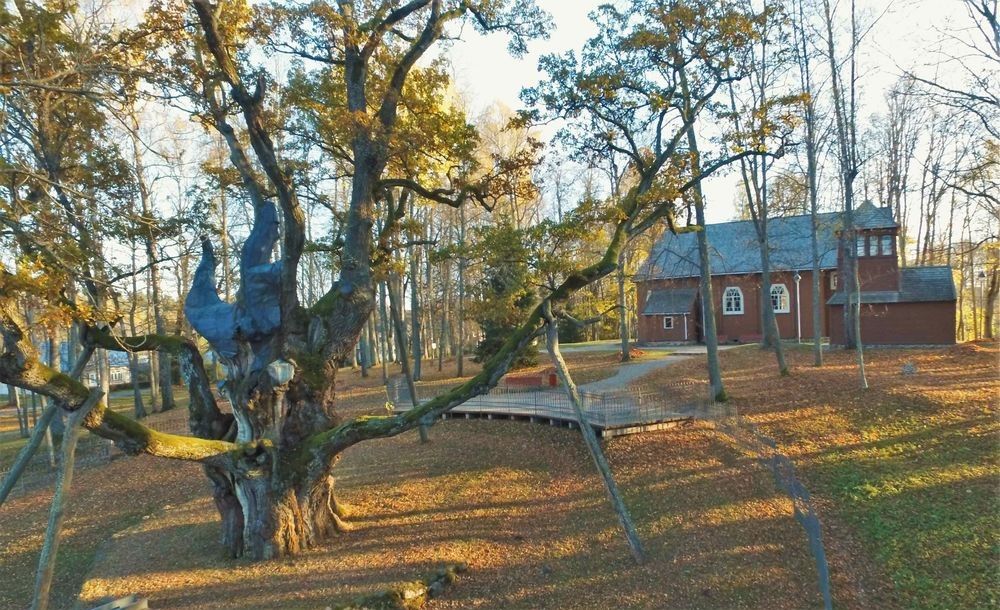
Its survival today is also the story of human care. The oak has been protected for decades (with formal protection dating back to the 20th century), and its condition has been monitored and supported, including the use of branch supports to reduce the risk of collapse. In recent years, specialists have continued assessing threats and proposing long-term management to help the tree endure.
History Passing Beneath Its Branches
The oak has not only witnessed natural changes, but also human conflict. During excavations a rifle and a human skeleton were discovered in the hollow of the oak, believed to belong to a French soldier from Napoleon’s army, possibly from the winter of 1812, when Napoleonic troops were retreating from Russia. Whether legend or likelihood, the find connects the oak to one of Europe’s most dramatic historical moments — suggesting that even armies once passed beneath its branches.
A Sacred Hollow and the World Below
For centuries, local people have believed the oak to be more than a tree. In Baltic folklore, oaks were sacred, often associated with gods of thunder and the forces that connect sky, with the earth. In Stelmužė, villagers believed that the oak’s hollow trunk formed a passage to the underworld, a place where worlds met and spirits moved between realms.
Such beliefs reflect how deeply the tree was woven into the spiritual world of the region — not as an object to be explained, but as a presence to be respected.
A Landmark of Faith and Craft
Standing beside the oak is another remarkable survivor of time: the Stelmužė Church of St Anne, the oldest surviving wooden church in Lithuania. Built in the 17th century, the church was constructed without a single metal nail, using only traditional wooden joints. Together, the oak and the church form a rare and powerful scene — nature and faith standing side by side, both shaped by patience, craftsmanship, and belief.
A National Symbol Carried Beyond the Village
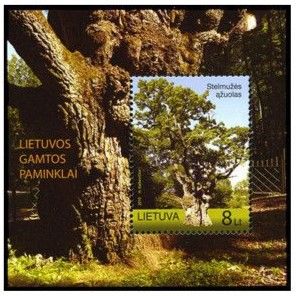
The importance of the Stelmužė Oak reaches far beyond its village. The tree has appeared on Lithuanian postage stamps, carrying its story across the country and beyond its borders. Acorns collected from the oak have also been used to grow new trees elsewhere in Lithuania, extending its legacy into the future.
The story of the Stelmužė Oak reached audiences beyond Lithuania as well. In the European Tree of the Year 2017 competition, the tree placed 12th, receiving 5,245 public votes — a sign that its ancient presence and layered history resonated across Europe.